
Summary
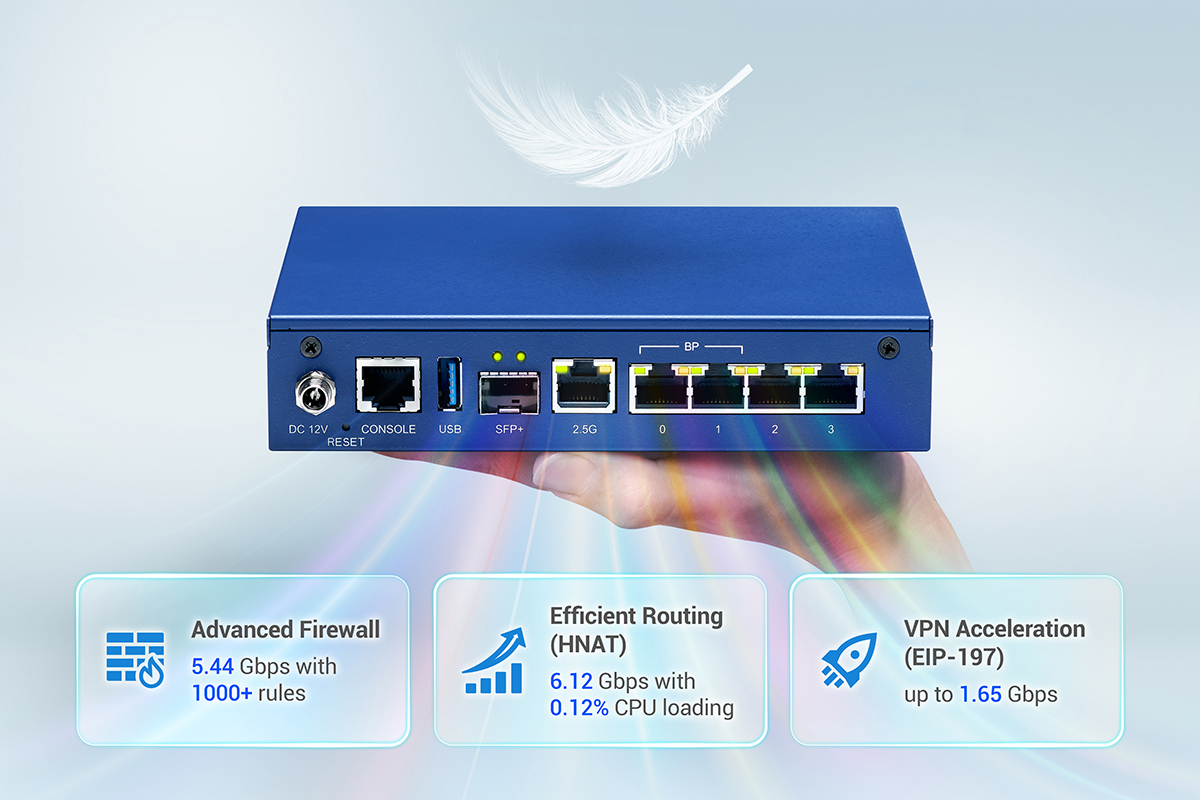
NEXCOM's DNA 140 represents a practical AI-in-a-box solution for organizations deploying advanced threat detection within resource-constrained edge environments. Built on the Intel Atom x7433RE processor (Amston Lake), the DNA 140 integrates a dedicated Hailo-8 edge AI processor via mini-PCIe expansion, enabling real-time, low-latency inference workloads without requiring external AI infrastructure. The platform addresses the convergence of 5G, SD-WAN, and SASE architectures, providing intelligent threat detection capabilities directly at branch offices, network edges, and secure access service edge (SASE) gateways.
Problem / Requirements
Organizations deploying distributed security architectures face an AI integration paradox: centralized threat analysis models require backhauling traffic to cloud or data centers, introducing latency penalties and bandwidth overhead, while local-only analysis lacks the context and sophistication to detect advanced threats. The DNA 140 addresses these requirements by:
- Offloading AI inference to edge hardware, eliminating cloud dependency
- Maintaining sub-millisecond response times for real-time threat detection
- Processing video streams for intelligent object detection and anomaly analysis
- Supporting 5G, SD-WAN, and SASE deployment architectures natively
- Reducing bandwidth consumption for security telemetry across WAN links
Technical Approach
The DNA 140 implements a tiered intelligence architecture. The Intel Atom x7433RE processor (Amston Lake) handles baseline network functions, policy routing, and non-accelerated security operations. The Hailo-8 edge AI processor, connected via mini-PCIe, provides specialized tensor compute optimized for computer vision and behavioral analysis workloads. This separation enables efficient resource utilization—the main processor manages network overhead while the dedicated AI accelerator focuses exclusively on inference, achieving processing efficiency impossible with general-purpose CPUs.
NEXBOOT™ technology ensures uninterrupted service and secure boot operations, preventing firmware tampering and enabling transparent recovery from abnormal termination events. The compact form factor (desktop appliance) suits edge deployments where server-class equipment isn't practical, while the proven Intel Atom architecture maintains compatibility with existing network OS implementations and security frameworks.
/table
Challenge | Solution
AI latency in cloud deployments | Edge-local Hailo-8 inference processor
Bandwidth overhead for telemetry | Intelligent local analysis reducing WAN load
Complex threat detection at branch | Low-latency behavioral anomaly detection
Firmware security vulnerabilities | NEXBOOT™ secure boot with integrity verification
Resource constraints in compact devices | Specialized AI accelerator, general-purpose processor
/endtable
Implementation Notes
The DNA 140 deploys as a primary security gateway or secondary intelligence enhancement within existing branch office infrastructure. Organizations implementing 5G SD-WAN solutions benefit from local threat analysis eliminating the need to route security telemetry across expensive WAN links. SASE platforms leverage the DNA 140's real-time behavioral analysis to enhance access control decisions without adding backend service latency.
Video analytics implementations—common in modern 5G deployments—utilize the Hailo-8 processor for license plate recognition, person detection, and crowd analysis at acquisition points rather than streaming raw video to central processing. This approach conserves bandwidth, reduces privacy exposure by processing only derived insights, and enables real-time event response at the edge.
Integration with existing SIEM platforms occurs through standard syslog and API mechanisms. The appliance maintains detailed audit logs of inference operations and security decisions, supporting compliance investigations and threat intelligence correlation with centralized security operations centers.
The compact form factor enables DNA 140 deployment in challenging environments: retail locations with limited physical space, mobile command centers requiring portable security infrastructure, and remote offices without dedicated IT infrastructure. The appliance's modest power requirements (USB or standard 12V power supplies) make it suitable for outdoor installations and field deployments where server-class infrastructure isn't practical.
Organizations deploying multiple DNA 140 units across distributed locations benefit from centralized model management—security teams publish updated threat detection models to all edge deployments simultaneously, ensuring consistent detection capability across the entire infrastructure. This capability proves especially valuable for organizations defending against region-specific or industry-specific threat patterns requiring custom model training.
Specifications Snapshot
/table
Specification | Detail
Processor | Intel Atom x7433RE (Amston Lake)
AI Accelerator | Hailo-8 edge AI processor (mini-PCIe)
Inference Latency | Real-time, sub-millisecond response
Form Factor | Desktop appliance (compact)
Applications | 5G, SD-WAN, SASE, video analytics
Secure Boot | NEXBOOT™ with integrity verification
Deployment Profile | Edge gateway, branch office enhancement
Video Processing | Real-time object detection, anomaly analysis
/endtable
Key Takeaways
The DNA 140 demonstrates the practical feasibility of decentralized AI-driven security. Rather than competing with expensive cloud AI services, the platform targets a specific architectural niche: organizations deploying distributed networks (5G, SD-WAN, SASE) that require localized threat detection without sacrificing sophisticated analysis capabilities. The Hailo-8 integration exemplifies a trend toward specialized AI accelerators replacing general-purpose CPUs for inference workloads. For security architects designing branch office modernization, local AI processing reduces operational complexity while improving threat response times—a compelling business case in environments where every millisecond of detection latency translates to organizational risk.
The platform's energy efficiency merits special consideration for edge deployments. The Hailo-8 accelerator processes video frames and complex threat detection models consuming fraction of the power required by GPU-based alternatives, enabling deployment in power-constrained environments and reducing operational costs over multi-year deployment lifecycles. Organizations operating hundreds of distributed edge locations benefit significantly from this efficiency advantage.
Deployment experiences demonstrate that the DNA 140's modular design enables staged security capability expansion. Organizations begin with basic threat detection, adding video analytics capabilities later as requirements clarify, without requiring hardware replacement or infrastructure overhaul. This flexibility aligns with operational realities where security requirements evolve based on observed threats and organizational risk assessments.
Contact NEXCOM
For specifications, availability, and technical inquiries, contact NEXCOM via the official website.
Source: https://www.nexcom.com/news/Detail/ai-integration-for-enhanced-private-network-protection