
Summary
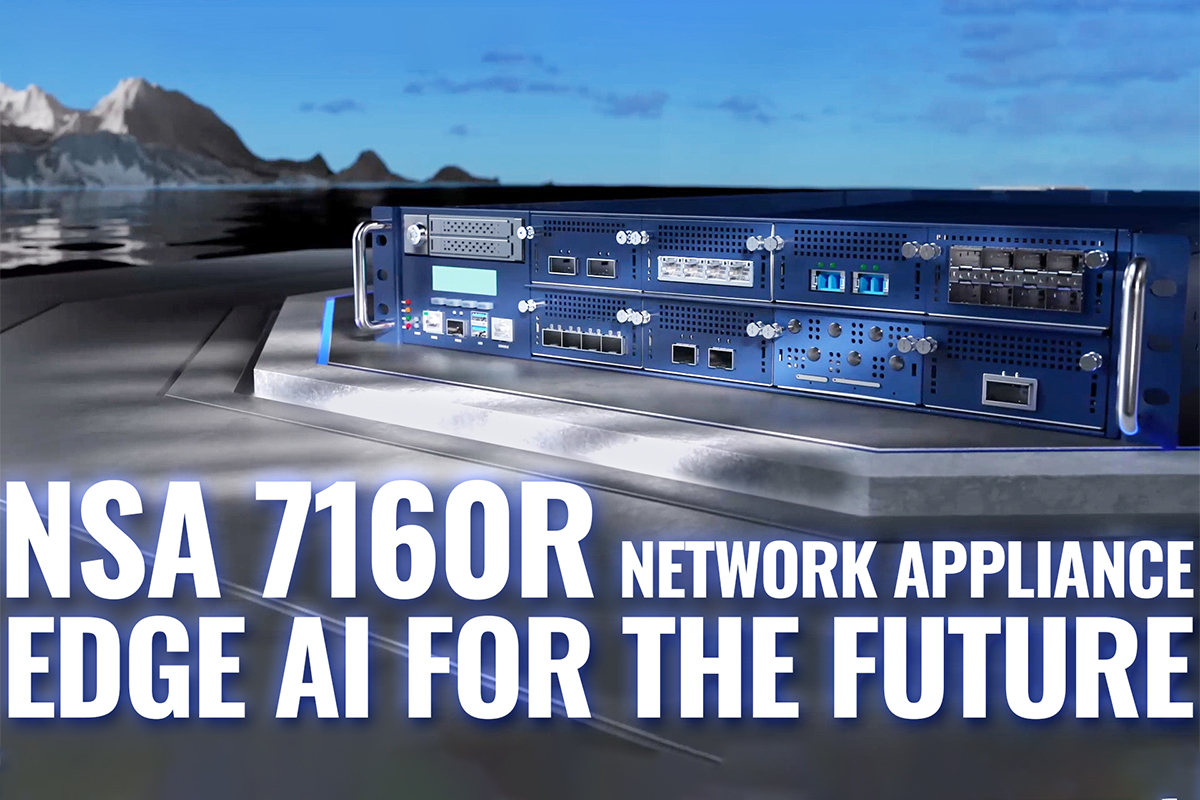
5G private networks and edge computing deployments demand high-port-count platforms supporting diverse connectivity standards. NEXCOM's FTA 1170 addresses this requirement through 24 x 2.5GbE ports, 4 x 10GbE ports, and optional 5G/4G/Wi-Fi connectivity, delivered as a 1U rackmount appliance. Based on Intel Atom P5300 processors and designed for multi-access edge computing (MEC), switch-server, or unified CPE (uCPE) operations, the FTA 1170 serves as the architectural centerpiece for 5G core network applications and enterprise broadband services.
Problem / Requirements
5G private network deployments encounter specific architectural needs:
- High Port Density: Supporting 28+ network connections in minimal space
- Mixed Speeds: Combining 2.5GbE distribution ports with 10GbE uplinks
- Wireless Integration: Optional 5G FR1, 4G LTE, and Wi-Fi 5/6 for mobile workforce connectivity
- PoE+ Delivery: Power supply to edge devices and wireless access points
- Multi-Role Operations: Function as edge server, managed switch, or uCPE simultaneously
- Compact Deployment: 1U rackmount suitable for campus networks, factories, and remote sites
Technical Approach
/table
Challenge | Solution
Multiple port count requirements | 24x 2.5GbE RJ45 + 4x 10GbE RJ45 + 4x 10GbE fiber ports
Wireless extension requirements | Optional 4G LTE, 5G FR1, Wi-Fi 5/6 modules
Power delivery to edge devices | PoE+ capability on 2.5GbE ports
Modular connectivity expansion | 1x LAN module slot for additional interfaces
Server-grade compute in 1U form | Intel Atom P5300 processor with virtualization support
Multi-function execution | Support for routing, switching, firewalling, and MEC applications
/endtable
The FTA 1170 leverages Intel Atom P5300 series processors, engineered for network edge appliances. These processors integrate cryptographic accelerators and virtualization extensions, enabling the appliance to execute multiple network functions and lightweight edge applications. The design supports both Layer 2 switching and Layer 3 routing operations, enabling dynamic reconfiguration based on deployment requirements.
Implementation Notes
Specifications Snapshot
/table
Specification | Detail
Processor | Intel Atom P5300
Ethernet Ports | 24x 2.5GbE RJ45 + 4x 10GbE RJ45
Fiber Ports | 4x 10GbE SFP+
LAN Module Slot | 1 slot for expansion
PoE+ Support | Available on 2.5GbE ports
Wireless Options | 4G LTE, 5G FR1, Wi-Fi 5/6 (optional)
Form Factor | 1U rackmount
Memory | Up to 16GB DDR4 (typical configuration)
/endtable
Operational Modes
The FTA 1170 supports three primary deployment architectures:
1. Multi-Access Edge Computing (MEC) Server: Hosts containerized applications, network functions, and AI inference engines at the network edge, reducing latency for time-critical workloads.
2. Managed Switch-Server: Provides Layer 2/3 switching with integrated firewall, QoS, and routing, functioning as the default gateway and aggregation point for access networks.
3. Unified CPE (uCPE): Acts as a customer premises equipment hub, integrating multiple WAN connections, VPN termination, SD-WAN, and local network management for enterprises and service providers.
Deployment Considerations
Network configuration options:
- Switching Mode: Configure 24x 2.5GbE ports as a managed switch fabric with 10GbE uplinks to core network
- Routing Mode: Enable VLAN routing and inter-subnet forwarding with ACL-based security policies
- Wireless Integration: 5G/4G modules provide WAN failover; Wi-Fi 6 modules enable broadband distribution
- VNF Execution: Linux-based platform supports open-source network functions (BIRD routing, ISC DHCP, etc.)
Connectivity expansion:
- LAN Module Slot: Accepts additional network interfaces (e.g., 40GbE, additional 10GbE, or specialty protocols)
- Wireless Extensibility: Replace or upgrade Wi-Fi/cellular modules without system replacement
- USB Management: Standard USB ports for out-of-band console access and device management
Monitoring and management:
- Web Interface: Browser-based configuration and monitoring dashboard
- SSH/Console: Standard Linux access for advanced configuration
- SNMP: Network management protocol support for integration with NOC systems
- IPMI/BMC: Out-of-band management and thermal monitoring
Key Takeaways
1. High Port Density: 24x 2.5GbE + 4x 10GbE + 4x fiber ports in 1U form enable simplified network consolidation.
2. Wireless Flexibility: Optional 5G, 4G, and Wi-Fi modules adapt to evolving wireless requirements without hardware replacement.
3. Multi-Role Architecture: Single appliance supports MEC, switching, routing, and CPE functions, reducing CapEx and operational complexity.
4. PoE+ Distribution: Integrated PoE+ on 2.5GbE ports eliminates separate power infrastructure for edge devices.
5. Edge Compute Foundation: Intel Atom P5300 platform supports lightweight containerized applications and network functions.
Contact NEXCOM
For specifications, availability, and technical inquiries, contact NEXCOM via the official website.