
Summary
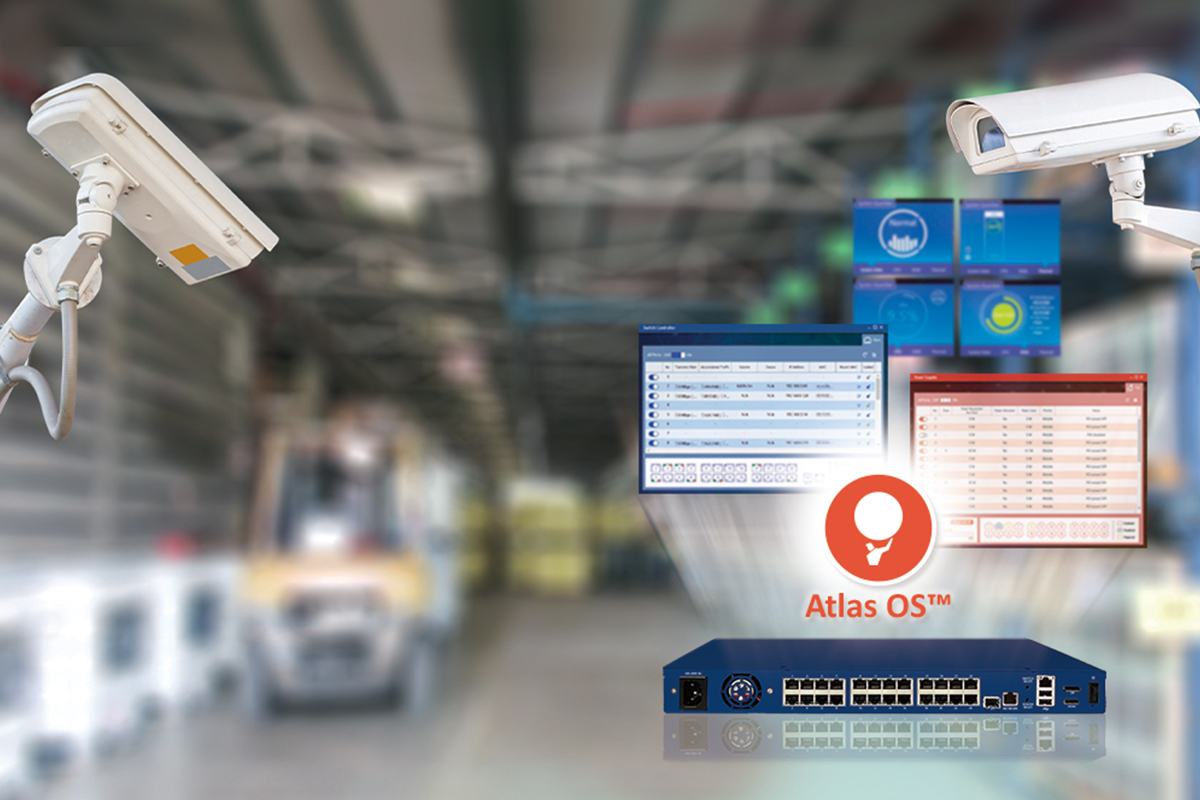
Industrial network-attached storage (NAS) deployments in outdoor substations, oil drilling platforms, and transportation equipment require ruggedized hardware tolerating extreme temperature ranges and environmental contamination. NEXCOM's iNAS 330 addresses these requirements through fanless design, IP67-rated M12 waterproof connectors, extended operating temperature support (-40°C to 70°C), and integrated PoE compliance. The compact appliance runs NEXCOM's proprietary Atlas OS, enabling web-based storage management, RAID configuration, and user access control in environments where traditional IT infrastructure is impractical.
Problem / Requirements
Industrial storage deployments encounter specific environmental and operational constraints:
- Extreme Temperature: Operation from -40°C (arctic/high-altitude) to 70°C (tropical/enclosed spaces)
- Environmental Contamination: Dust, moisture, salt spray, and vibration in outdoor installations
- Power Delivery Simplicity: PoE compliance eliminates separate power infrastructure and reduces installation complexity
- Network Connectivity: Waterproof connectors enabling installation in exposed or wet environments
- Robust Management: Web-based interface for non-IT personnel managing storage in remote locations
- Fanless Operation: Silent, vibration-free design suitable for sensitive monitoring equipment co-location
Technical Approach
/table
Challenge | Solution
Extreme temperature operation | Marvell ARMADA dual-core processor with passive cooling design
Waterproof connectivity | IP67-rated M12 connectors for drives and network
Power delivery | IEEE 802.3af/at PoE compliance (eliminates AC distribution)
Storage expansion | Support for up to 3x 2.5" drives
Remote management | Atlas OS web interface accessible over Ethernet
Thermal management | Fanless architecture with heat-sink design
/endtable
The iNAS 330 leverages Marvell ARMADA dual-core ARM Cortex-A9 processors, architecturally suitable for low-power, passively-cooled designs. The processor includes hardware-accelerated encryption support and sufficient throughput for RAID operations in industrial environments. Storage capacity scales up to 3 x 2.5" drives (supports up to 2TB per drive in modern configurations), providing 6TB maximum capacity in the compact form factor.
Implementation Notes
Specifications Snapshot
/table
Specification | Detail
Processor | Marvell ARMADA dual-core ARM Cortex-A9
Storage Drives | Up to 3x 2.5" (SAS/SATA)
Maximum Capacity | 6TB (with 2TB drives)
Network Interface | IP67-rated M12 RJ45 connector
Storage Connector | IP67-rated M12 connector for drives
Operating Temperature | -40°C to 70°C
Power Supply | IEEE 802.3af/at PoE
Cooling | Fanless (passive heat dissipation)
OS | NEXCOM Atlas OS
Protocols | SMB, NFS, FTP, HTTP/HTTPS
/endtable
Environmental Resilience
The iNAS 330 design incorporates ruggedization across multiple subsystems:
Thermal Management:
- Fanless Architecture: Eliminates vibration and acoustic noise; extends component lifespan in harsh environments
- Extended Operating Range: Passive heat dissipation supports sustained operation from Arctic (-40°C) to tropical environments (70°C)
- Component Selection: Industrial-grade capacitors and conformal coating on PCBs resist moisture and salt spray
Connectivity:
- M12 Connectors: IP67 waterproof standard (immersion up to 1 meter, 30 minutes) for outdoor installation
- Automatic Failover: Redundant network connectivity options for critical monitoring deployments
- RJ45 Compatibility: Standard Ethernet for data center-style installations with conversion adapters
Mechanical Robustness:
- Compact Form Factor: DIN rail mounting option for industrial control cabinet integration
- Vibration Tolerance: Solid-state construction without moving parts (apart from drive spindles)
- Shock Resistance: No active cooling components susceptible to damage from mechanical vibration
Storage Configuration
RAID support enables data protection in remote deployments:
- RAID 1 (Mirroring): Two drives provide redundancy; automatic recovery from single-drive failure
- RAID 5 (Striping with Parity): Three drives distribute data with parity; supports single-drive failure
- Single Drive: Direct storage mode for simple archive or streaming applications
Typical configurations:
- Substation Monitoring: RAID 1 with dual 1TB drives; daily logs from multiple sensors
- Mobile Platform: Single 512GB drive; local caching with remote backup to cloud storage
- Distributed Sensor Network: RAID 5 with three 2TB drives; multi-day buffer before cloud synchronization
Management and Access
Atlas OS provides simplified management interfaces:
Web Interface Features:
- Drive Management: Initialize RAID, monitor drive health, and plan replacements
- User Permissions: Role-based access control for multi-user environments
- Network Configuration: DHCP/static IP, DNS, and gateway configuration
- Protocol Support: SMB (Windows file sharing), NFS (Unix/Linux), FTP (legacy)
- Backup Scheduling: Automated synchronization to remote NAS or cloud storage
- Alert Notifications: Email alerts for drive failures, temperature anomalies, or capacity thresholds
SSH/Console Access:
- Command-line administration for advanced configuration
- Custom backup scripts and monitoring integration
- Telemetry export for integration with industrial SCADA systems
Integration Scenarios
Common deployment patterns:
- Substation Automation: Continuous logging from power monitoring equipment; automatic upload to regional data center
- Oil/Gas Equipment: Data acquisition from drilling sensors; local RAID redundancy with periodic extraction via field technician
- Transportation Fleet: Vehicle diagnostics and black-box recording; edge caching with cloud synchronization
- Environmental Monitoring: Weather station and seismic sensor aggregation; geographic distribution of redundant nodes
Key Takeaways
1. Extreme Temperature Support: Operation from -40°C to 70°C enables deployment in geographically diverse industrial environments.
2. Waterproof Connectivity: IP67-rated M12 connectors permit installation in outdoor and exposed locations without enclosure requirements.
3. Fanless Design: Passive cooling eliminates maintenance burden and acoustic noise in sensitive monitoring deployments.
4. Simplified Power: IEEE 802.3af/at PoE compliance eliminates need for separate AC power infrastructure.
5. Non-IT Management: Web-based Atlas OS interface enables storage administration by field technicians without IT background.
Contact NEXCOM
For specifications, availability, and technical inquiries, contact NEXCOM via the official website.