The old comfort blanket of “we’ll upgrade when needed” doesn’t survive this scenario. By the time you upgrade, your past is already compromised.
Encryption was built on a simple comfort: if something is hard enough to break, it might as well be unbreakable. RSA, ECC, all the familiar acronyms. They’ve been doing the heavy lifting behind secure communications for decades, sitting there like invisible bodyguards.
Then quantum computing showed up and ruined the illusion. Not today, not everywhere, but eventually.
Because once large-scale quantum machines become viable, those “hard problems” stop being hard. They become solvable. Efficiently solvable. Which is a polite way of saying everything you thought was locked… wasn’t.
And here’s where the time travel part gets uncomfortable.
Patience as a Service: The New Business Model of Cyberattacks
Attackers don’t need to break encryption in real time. That would be messy, expensive, and frankly inefficient.
Instead, they just collect it.
Encrypted traffic. Sensitive archives. Long-term secrets. All vacuumed up and stored. Waiting. Quietly aging like a very bad investment that somehow pays off later.
Call it patience as a service. No rush. No noise. No need to even understand what treasure you’re stealing yet.
By the time quantum capability catches up, the past becomes readable. Contracts, infrastructure data, credentials, communications. Things that were never meant to be seen by again suddenly become… accessible.
That’s time travel, straight into your historical data.
The Edge Is Where Time Leaks
People love talking about cloud security like it’s the center of the universe. It isn’t. The edge is where reality actually happens.
Factories, substations, transportation systems, remote sites, IoT deployments. Data is born there, processed there, and often protected… optimistically.
Edge environments have a few charming traits:
- Distributed and hard to update
- Performance-sensitive
- Physically exposed
- Full of long-lifecycle systems
In other words, perfect places for time-delayed risk to accumulate.
You can upgrade a data center with a well-coordinated plan. Try doing that across thousands of edge nodes running critical workloads without breaking something important. It’s less “deployment” and more “controlled chaos.”
Whatever you deploy at the edge today needs to survive the future. Not just functionally, but cryptographically.
Rewriting the Timeline with PQC
Post-quantum cryptography isn’t glamorous. It doesn’t feel like innovation. It feels like reinforcing a door after realizing someone has been quietly copying your keys for years.
But it works.
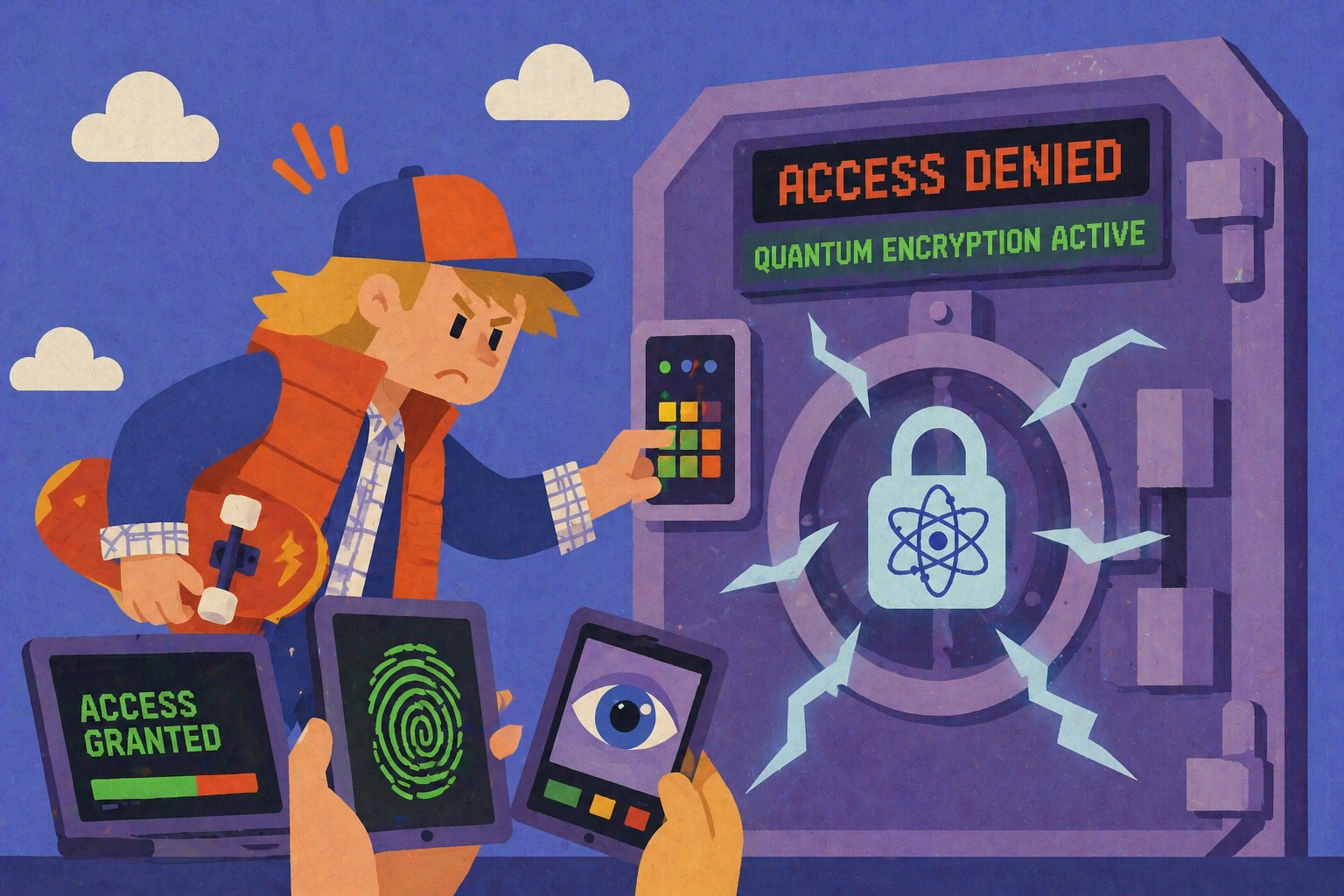
Instead of relying on mathematical problems that quantum computers can crack, PQC uses structures that, as far as we know, remain resistant. High-dimensional lattice cryptography (think complex grids of points), alongside other approaches like code-based, hash-based, and multivariate schemes—all aiming for the same outcome: make future decryption attempts useless.
You’re no longer protecting data for the present moment. You’re protecting it across time.
No More “Decrypt Later”: PQC Starts at the Edge
Somewhere in this mess of timelines and delayed consequences, actual hardware has to carry the burden. Not abstract strategies. Not whitepapers (even the one we conveniently prepared with our partner). Real systems, sitting in real environments, doing real work.
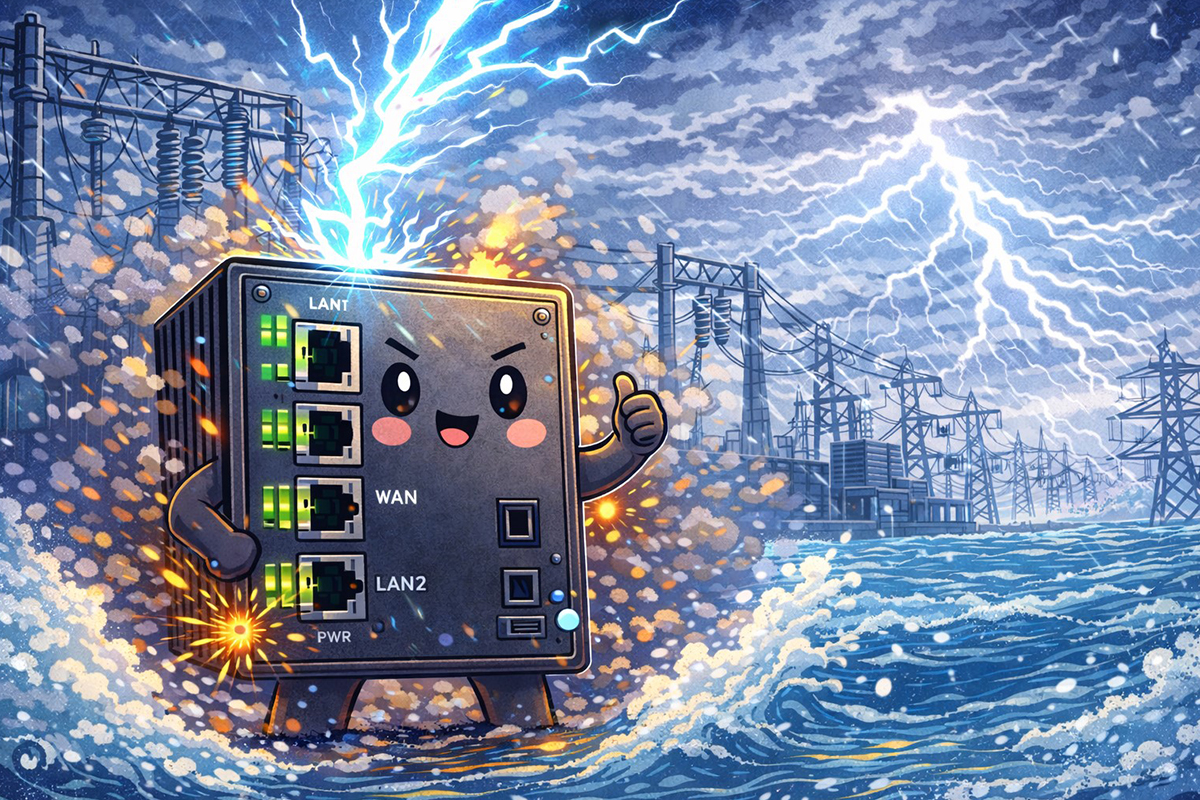
And somewhere in this fractured timeline, one machine is already playing the long game: FTA 5190 — a PQC-ready compact edge server built to hold the line when the future starts rewriting the past. Because even if the future doesn’t play fair, it stays secure.
It’s built for high-speed Ethernet environments, which is a polite way of saying it lives where latency matters and excuses don’t. This isn’t lab equipment. It operates where packets don’t wait and failures get noticed immediately.
What makes it relevant isn’t just performance. It’s the ability to support the transition, not just the end state. Because nobody sane is flipping a switch from classical cryptography to PQC overnight.
So FTA 5190 aligns with reality instead of fighting it:
- Supports hybrid cryptography, letting classical and post-quantum algorithms run side by side while the world catches up
- Delivers the compute headroom needed for heavier PQC workloads without choking performance
- Holds steady across distributed edge deployments where downtime is not a learning experience anyone enjoys
It doesn’t promise perfection. It does something more useful. FTA 5190 refuses to become obsolete the moment quantum computing grows up.
Which, surprisingly, is a high bar these days.